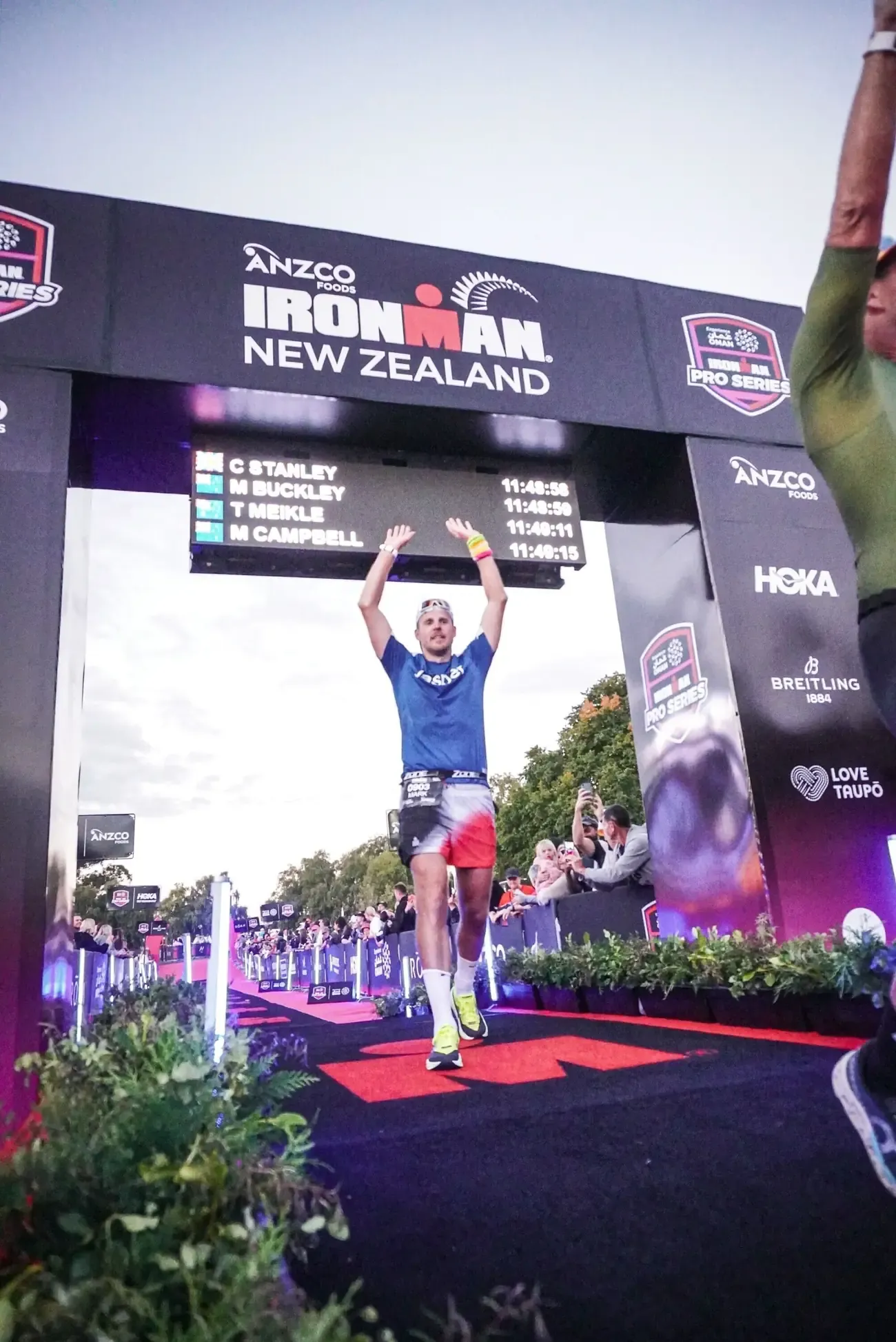
IRONMAN New Zealand and IRONMAN 70.3 New Zealand both race at Taupō on Saturday 6 March 2027 (IRONMAN New Zealand). The swim is in a fresh-water lake, the bike rolls on chip-seal country roads, and the run goes through town. On a calm day it’s fast, on a windy day it’s one of the hardest races I’ve done, so train for the windy one.
I raced IRONMAN New Zealand as a pro, and 2 of those days could not have been more different. In 2016 the conditions were close to perfect and I went 8:29:38, which was only good enough for 10th. In 2017 it blew a gale, I lost minutes in the swim and 9 minutes on the bike, and finished 5th.
Same course. The wind made it a different race.
The swim: fresh water, and chop when it blows
The swim is in Lake Taupō: a deep-water start for the Ironman, a beach start for the 70.3. IRONMAN’s course page puts the water at around 19 degrees, and on race day in 2024, 2025 and 2026 it was 21.
Fresh water floats you less than the sea, so your legs sit lower and you work harder for the same speed. Most of your open-water swims should be in your wetsuit, and in fresh water if you can get to a lake.
The lake is usually flat early in the morning. But when the wind’s up, it chops up fast.
In 2017 the waves felt perfectly out of time with my stroke rate. I couldn’t find a rhythm, kept swimming off course, and lost minutes on the year before.
What I’d add to the build:
- Swim in rough water on purpose. If it’s windy at your beach, that’s your session. Learn to shorten your stroke, lift your rate and breathe to whichever side the waves aren’t.
- Sight more than you think you need to. Every 6 strokes in chop. Practise it in the pool too, lifting your eyes without dropping your hips.
- Don’t chase the time. On a choppy day everyone’s slow. A steady swim that gets you to T1 calm is worth more than 2 minutes you paid for with your legs.
The bike: rolling chip seal, and the wind decides the day
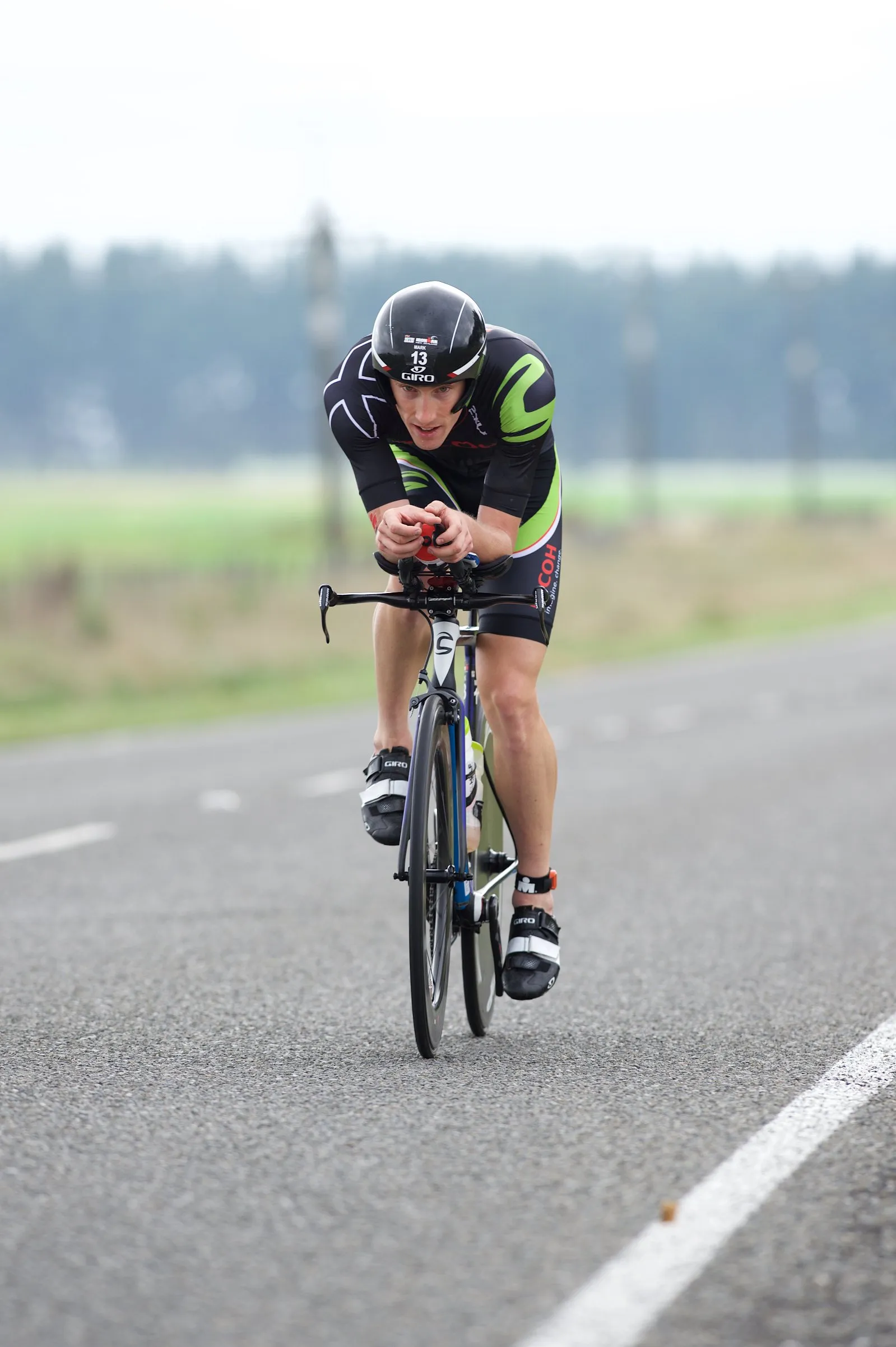
The bike course has changed since I raced it. On the 2027 course the full Ironman rides 2 laps and the 70.3 rides 1. You head out of town on Rifle Range and Broadlands Roads, drop down to the Aratiatia Dam and climb back up, then ride State Highway 5 and the farm roads (Homestead, Halcrow and Vaile) before Broadlands Road brings you home.
The roads are mostly chip seal, which is slow and rough on your body over 180km. Riding back through town onto smoother surfaces feels like someone took the brakes off.
And the wind. A loop through open farmland means you’ll ride into it somewhere on every lap.
On the old out-and-back course in 2017, I hit 79km/h on the way out with a tailwind on a road that’s barely downhill. Coming back I was barely doing 25km/h for long stretches.
Ride to power, not speed
In the wind, speed means nothing. If you chase speed into a headwind you’ll blow up. If you ease off in the tailwind you’ll throw away free time.
So do your long rides with a power or heart rate target, and ignore your speed. Find a windy day and ride an out-and-back on purpose.
Hold the same power both ways and see how different the speeds are. That’s what race day feels like.
Aero matters into a headwind
Most of the time you lose at Taupō comes from riding into the wind. That’s where your aero position pays off the most. So build long, unbroken time in your TT bars through the build, and hold it at race power.
But it rolls, and the surface is rough. So don’t do all of it on the trainer. Get out on rolling chip-seal roads for your longest rides, so your body gets used to the vibration and the constant small changes in gradient.
The second lap
The second lap is where Ironman is decided. In 2017 I rode the first lap well and spent the second “embarrassed to be riding so slow”. Your longest rides should finish with your race-pace work at the end, not the start, so you practise holding power when you’re tired.
The run: laps of the lakefront
The Ironman run is 4 laps: through town, out along the lakefront to the 2 Mile Bay turnaround and back on Lake Terrace, with a crowd the whole way. The 70.3 runs 2 laps. It rolls more than the elevation profile suggests.
In 2016 I felt amazing coming off the bike. In 2017 I felt like I’d already run a half marathon.
The difference was the bike, not the run training. Pace the bike right and the run takes care of a lot of itself.
- Practise running on tired legs. A 20 to 30 minute run straight off your long ride, every 2nd week.
- Break it into laps. 4 laps is easier to think about than 42.2km. Run the first lap easier than you want to.
- Practise your race-day fuelling on long runs, at the same rate you plan to take on the day.
IRONMAN or 70.3?
Both races run on the same day. If you’re picking between them, the 70.3 is a great first half: big-event feel, a crowd all the way, and a course that rewards sensible pacing. The full Ironman needs around 26 weeks of build and 10 to 14 hours a week to do well.
If you’re doing the 70.3 on around 10 hours a week, here’s my 17-week 70.3 Taupō plan, counted back from race day.
Common questions
Is IRONMAN New Zealand a fast course?
On a calm day, yes. In 2016 the conditions were close to perfect and the times were very fast.
On a windy day it’s one of the slowest. Train for the wind, then enjoy it if it doesn’t turn up.
How cold is Lake Taupō for the IRONMAN swim?
IRONMAN puts it at around 19 degrees, and on race day in 2024, 2025 and 2026 it was 21. It’s fresh water, so you float less than in the sea.
Is the IRONMAN New Zealand bike course hilly?
It rolls rather than climbs. There’s a hill out of town, then rolling country roads on chip seal. The wind usually makes more difference to your time than the hills do.
When should I start training for IRONMAN New Zealand 2027?
September, for 6 March 2027. That gives you 26 weeks, enough for a full base, build and race-specific phase with a 2 to 3 week taper. The full week counts are on the NZ triathlon season page.
Work with me
I coach from Auckland, 1-on-1 through TrainingPeaks. If Taupō’s your race, get in touch, or start with my Ironman training plan or 70.3 training plan, both built to the 2027 race date. More on full-distance coaching: Ironman coaching in New Zealand.
Last updated November 2026.
Mark Bowstead raced as a professional triathlete from 2012 to 2020, including 5th at IRONMAN New Zealand in 2017, and has coached endurance athletes since 2017 through Bowstead Performance Coaching.