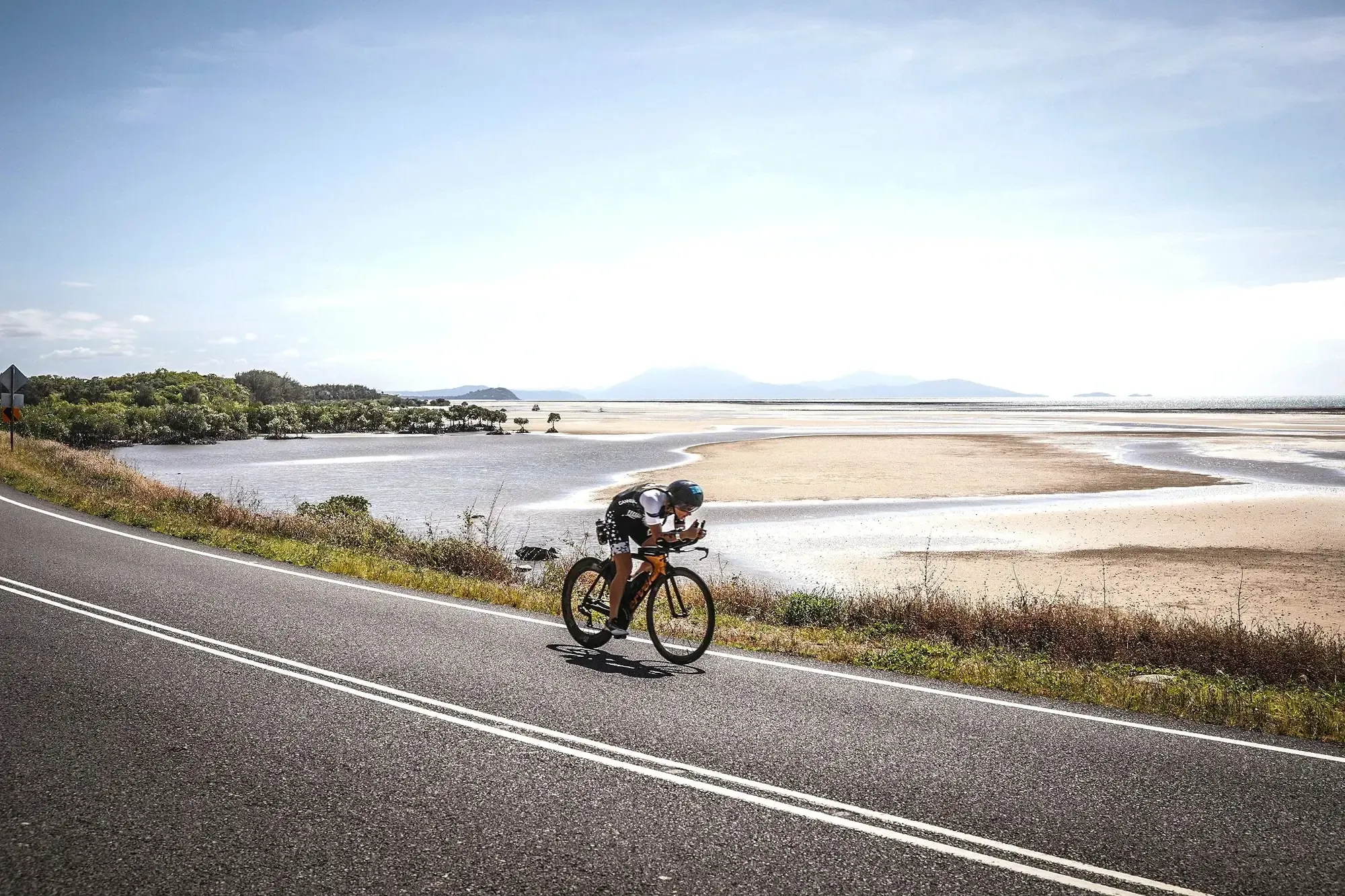
The Tauranga Half is a 2km sea swim, a 90km bike that’s close to dead flat, and a 21.1km run around the base of Mount Maunganui. A flat course sounds easy. It isn’t. You’ll sit in one position, at one effort, for well over 2 hours, and the training has to get your body ready for exactly that.
It’s on Saturday 23 January 2027 (Mount Festival of Multisport). If you want the dates for the rest of the season, they’re on the NZ triathlon season page.
I raced it as a pro, 4th in 2015 and 2nd in 2016 off the fastest bike split of the day. Most of what’s below I learned the hard way on that road.
The swim: sea water, flat and fast
The swim is one lap of the bay from the Salisbury Wharf end, on the harbour side of the Mount. It’s usually flat.
Sea water floats you more than a lake does. So your legs sit higher and the swim feels a bit easier than the same effort at Taupō or Wānaka. Good news for weaker swimmers.
What I’d change in training:
- Get some open-water swims in salt water if you can. The extra float changes your body position and your stroke feels different. Better to find that out in December than on race morning.
- Some years it’s warm. Under the 2026 race manual, age-group wetsuits are compulsory below 16°C and not allowed above 23°C, and the call is made an hour before the start. Do a few open-water swims without a wetsuit so a non-wetsuit call doesn’t throw you.
The bike: no hills, no rest, no excuses
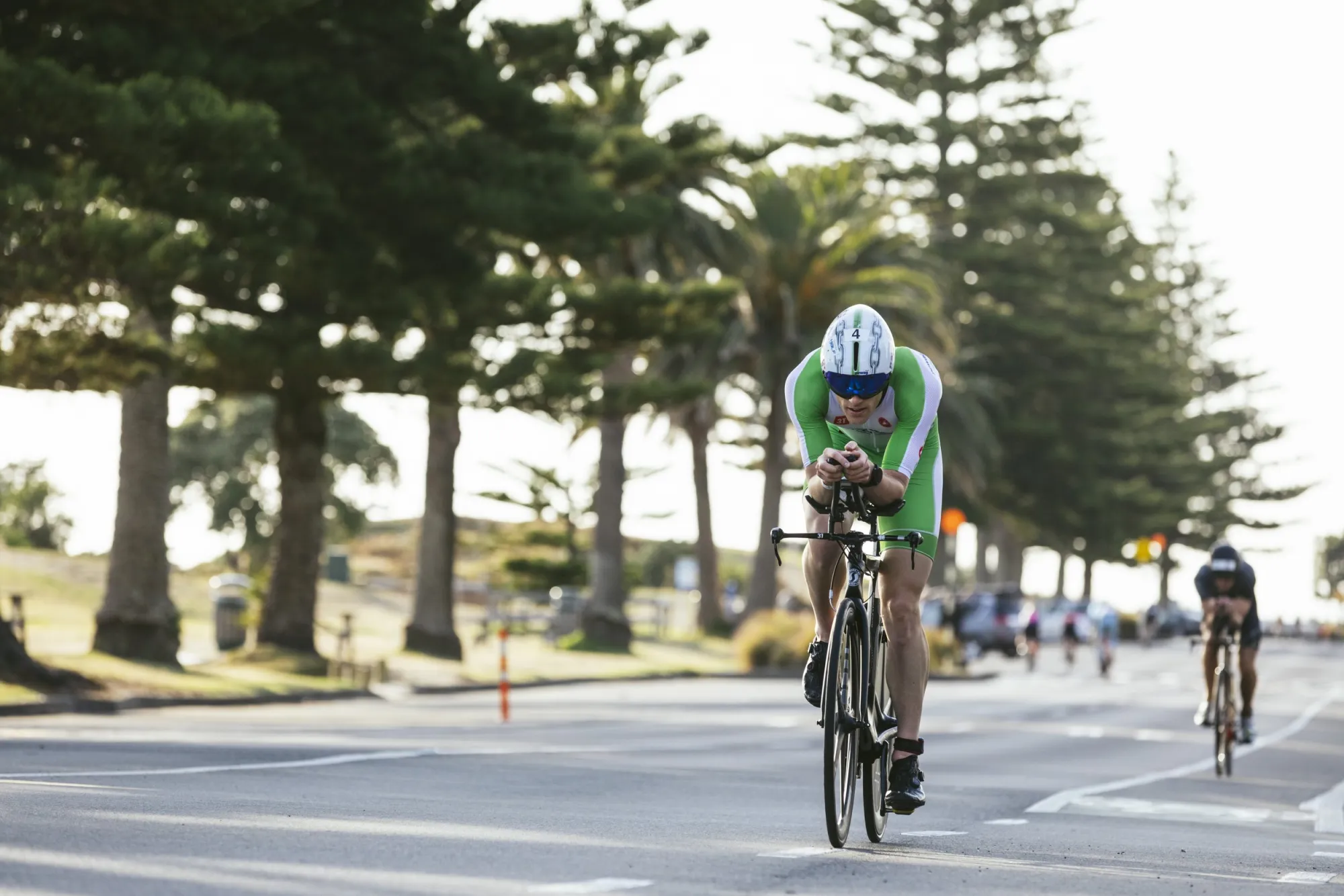
In 2026 the bike did 2 laps on the Tauranga Eastern Link, a toll highway with only athletes and race vehicles on it, and the 2027 manual is still to come. It’s smooth, it’s fast, and it’s flat.
On a hilly course you get a break every time the road tips down. Here you don’t. You’re in your TT bars, pushing the same power, for the whole 90km.
That changes 3 things in your build.
1. Aero time is a fitness, so train it
Most athletes can hold their aero position for 20 minutes. Very few can hold it for 2 hours and 20 minutes without their neck, shoulders and lower back starting to complain. On a flat course, sitting up costs you speed every minute you do it.
So build unbroken aero time the same way you’d build a long run:
- Start with 3 x 15 minutes in the bars, no sitting up.
- Add 5 to 10 minutes a week.
- By the last 6 weeks, you want 60 to 90 minutes in one block, at race power, without moving.
The indoor trainer is genuinely race-specific for this course. A flat, steady ride on the trainer is close to what Tauranga asks of you, so don’t feel like you’re missing out by riding inside.
2. Big gears to load up your lower back
On a flat course your lower back and glutes carry the load the whole way. There’s no climb to change the muscles you’re using. Same muscles, same angle, for 90km.
So I add big-gear work. Low cadence, around 60 to 70rpm, at tempo power, seated and in the bars. Something like 4 x 8 minutes in the middle of a longer ride, building to 3 x 15 minutes.
It loads your lower back and hips under control, in training, so they hold their shape late in the race. Pair it with 2 short strength sessions a week for your trunk and glutes, and that’s most of the job.
3. Pace it by power, not by feel
A flat course never makes you back off. The power you pick in the first 10km is the power you’ll be paying for at 80km.
I’ve done this myself. In 2016 I rode the first lap off top-form numbers I wasn’t holding at the time and grovelled the second. The year I raced it, the last 20km was into a very solid headwind, so the early overspend got charged back right at the end.
Do your race-pace rides at the exact number you’ll race at, and do at least 2 of them over 60 minutes. If that number feels hard at 60 minutes in training, it’s too high for race day. More on how the bike decides your run: how to pace a 70.3 bike.
The run: flat, then it bites
The run is 2 laps. Most of it is flat.
Then you hit the base track around the Mount, a limestone path that rolls up and down with some short, steep pinches. They hurt more on the second lap.
After 90km in one fixed position, your hip flexors are tight and your back is tired. Then the course asks you to climb.
- Run off the bike every week in the build, even just 15 to 20 minutes, so the change of position stops being a shock.
- Put short hills in your longer runs. 6 to 8 short, steep pinches inside an easy run is plenty. You’re teaching your legs to climb when they’re tired, not doing a hill session.
- Plan for heat. It’s late January. Practise your race-day drinking in the warmest part of the day at least a few times.
Christmas
Christmas lands about 4 weeks before Tauranga, in the sharpest part of the build. Plan the 2 weeks around it now. A long aero ride on Boxing Day morning does more for this race than you’d think.
Common questions
Is the Tauranga Half a good first half Ironman?
Yes, if you’re comfortable in your aero bars. The course is flat and the support is good. The hard part is holding one position for over 2 hours, so start the aero work early.
Should I ride a TT bike or a road bike at Tauranga?
A TT bike, or a road bike with clip-on aero bars, if you’ve trained in it. On a course this flat, aero position is worth more than anywhere else in New Zealand. But only if you can hold it, so the training matters more than the bike.
How many hours a week do I need for the Tauranga Half?
8 to 10 hours a week, held consistently for around 20 weeks, gets most working athletes to a half they can run the whole way. Protect the long ride; that’s where your aero time gets built.
Why does my lower back hurt on long flat rides?
Because nothing changes. On a hilly ride you stand, climb and descend, and the load moves around.
On a flat ride it sits in the same place for hours. Build aero time gradually, add big-gear work and keep 2 short strength sessions a week.
Work with me
I coach from Auckland, 1-on-1 through TrainingPeaks. If Tauranga’s your race and you want a build written around this course and your actual week, get in touch. Or start with a 70.3 training plan built to the 2027 race dates.
Mark Bowstead raced as a professional triathlete from 2012 to 2020, including 2nd at the Tauranga Half in 2016, and has coached endurance athletes since 2017 through Bowstead Performance Coaching.