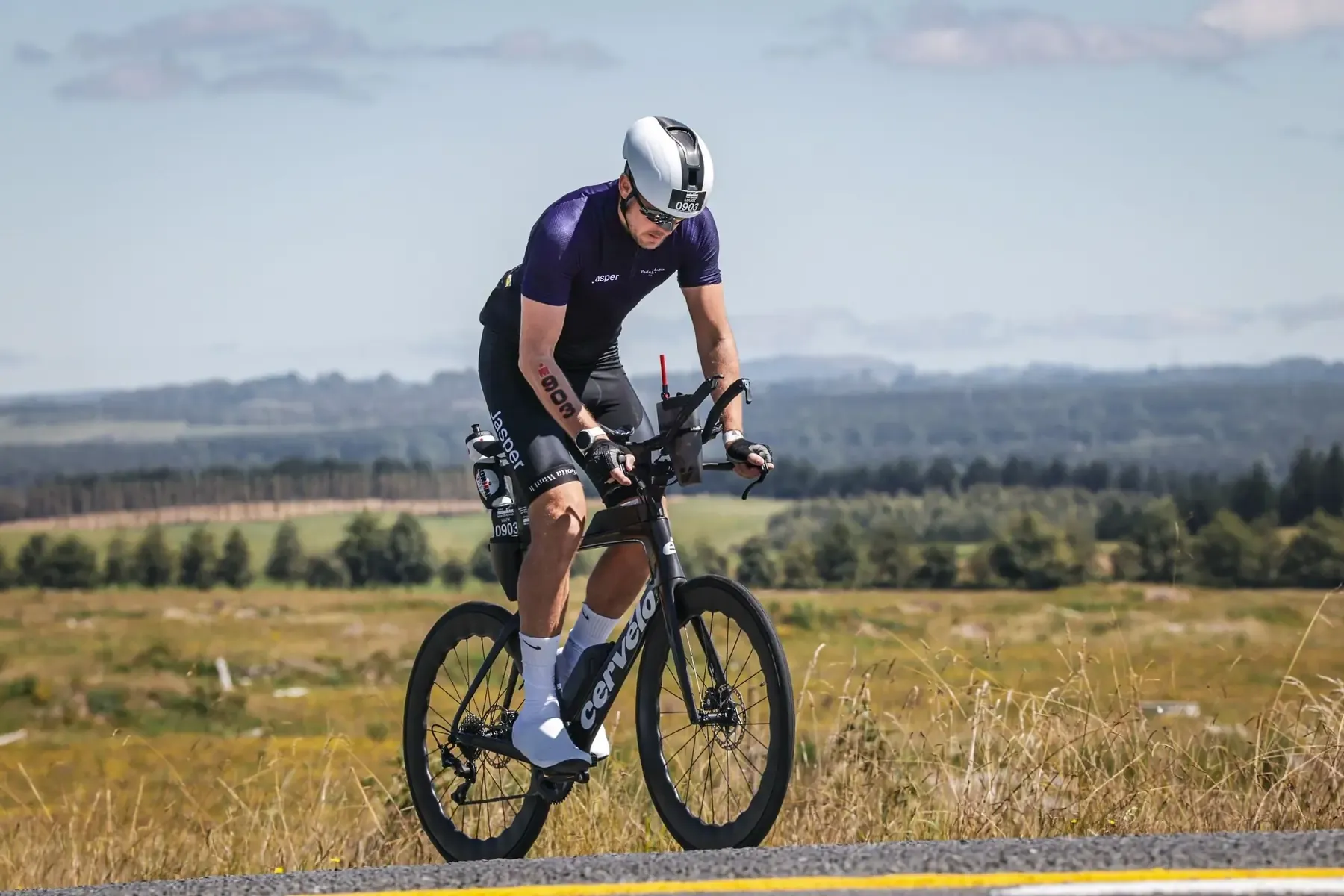
I coach Ironman and 70.3 athletes 1-on-1 through TrainingPeaks, and most of them train around a full-time job. Training for long course comes down to the basics, done consistently, in the right order, and changed when life happens. The skill is in the judgment about you, this week. Here’s how that works.
Every week starts with the last one
Before I write your next week, I go through the one you just did: what you completed, your heart rate against your power or pace, where it drifted, and what you wrote in the comments. Then I check where you are in the build and what your race needs next. The new week comes from those two things.
Before it goes to you, I check the balance: hard, long and easy in the right mix for the phase, in a rhythm that fits your life. If you fly for work on Tuesday, the hard session goes on another day.
How you slept and how hard a session felt tell me more than an HRV app does.
How a build fits together
For IRONMAN New Zealand or a 70.3, 6 months out is the ideal start and 4 months is workable. A build runs base, build and peak, then a taper and race week. Most blocks are three weeks of building and one easier week, and the easier week cuts the hours by about a third. Weekly hours rise no more than 10% from one week to the next. After an illness, we restart 20 to 30% below the last full week.
Most of my athletes train 10 to 14 hours a week through an Ironman build. Fewer hours done with intent beat big weeks you can’t recover from. A 20-hour week is no use to you if it leaves you sick or injured. If you’re over 40, here’s how I coach masters triathletes.
Written for your engine
Two athletes with the same FTP can need different training. One is a diesel who holds steady power all day. The other has a bigger top end and burns through carbohydrate faster at the same watts. Sport scientists call that difference VLaMax. I write for the athlete you are, and I never copy one athlete’s plan for another.
Durability and race day
The back half of an Ironman is decided by durability: how well you hold your power and pace late in the day. On long aerobic sessions I watch how far your heart rate drifts against your power or pace (that’s decoupling), and under 5% is a good sign. There’s more in my piece on durability in endurance sports.
Closer to race day we build your pacing and fuelling plan for the course, and train your gut to handle carbohydrate at race intensity. I pulled apart 3 athletes’ race files from one weekend to show how pacing the bike decides the run.
What I won’t do
- Promise a time, a podium or a PB.
- Push you through clear overreach. Recovery wins over the schedule.
- Write sessions through pain. A sore tendon gets a session that doesn’t load it, and a referral to a physio.
Who it suits
Not everyone needs a coach. In your first year or two, almost any sensible plan works. Coaching earns its money in the plateau years, when you’re training hard and the times have stopped moving. If a fixed plan suits you better, my 70.3 plan and Ironman plan are built to your race date.
About me
I raced professionally for nine seasons, 2012 to 2020. I won IRONMAN 70.3 Buffalo Springs in 2015 and was 3rd at IRONMAN Australia in 2018, setting the bike course record. I coach from Auckland, with athletes across New Zealand and overseas. The NZ races I coach toward are on the Ironman coaching in New Zealand page.
Talk to me
Coaching options and prices are on the coaching options page. If you’re building toward a 70.3 or an Ironman, get in touch and tell me your race and the hours you’ve realistically got.