The New Zealand triathlon season 2027 runs from 23 January to 6 March: the Tauranga Half on 23 January, Challenge Wānaka 100 on 20 February, and IRONMAN New Zealand plus IRONMAN 70.3 New Zealand together at Taupō on 6 March. Counting from the first week of September, that’s 20, 24 and 26 weeks of build.
If you’re racing any of them and haven’t started, start this Monday.
The four races of the New Zealand triathlon season 2027
| Race | Date | Distance |
|---|---|---|
| Loan Market Oceanside Tauranga Half | Saturday 23 January 2027 | 2 / 90 / 21.1 km |
| Gallagher Insurance Challenge Wānaka 100 | Saturday 20 February 2027 | 2 / 80 / 18 km |
| ANZCO Foods IRONMAN New Zealand | Saturday 6 March 2027 | 3.8 / 180 / 42.2 km |
| ANZCO Foods IRONMAN 70.3 New Zealand | Saturday 6 March 2027 | 1.9 / 90 / 21.1 km |
Dates and distances confirmed against Mount Festival of Multisport, Challenge Wānaka and IRONMAN New Zealand, checked September 2026.
Taupō runs both distances on the same day, same course. So if you’re picking a first half and you want the big-race feeling, that’s the one.
How many weeks you’ve actually got
Counting from Monday 7 September 2026:
- Tauranga Half: 20 weeks
- Challenge Wānaka 100: 24 weeks
- IRONMAN New Zealand and 70.3 New Zealand: 26 weeks
Those are good numbers. 20 weeks is enough to build a genuine half-distance engine off a reasonable base. 26 weeks fits a full Ironman build with a recovery week every fourth week and a 2 to 3 week taper still inside it.
Subtract a week for every week after that. Start on Monday 2 November and you’re 8 weeks down on those numbers, and the time comes off the base phase rather than the taper, which is the part you can least afford to lose.
Tauranga Half, 23 January 2027
The first proper race of the season, at Mount Maunganui. I’ve had athletes turn up to it underdone because it lands so early in the summer, before the season feels like it’s started.
It sits inside the Fulton Hogan Mount Festival of Multisport, so there’s an aquabike and a half marathon on the same weekend if the full thing is too much this year.
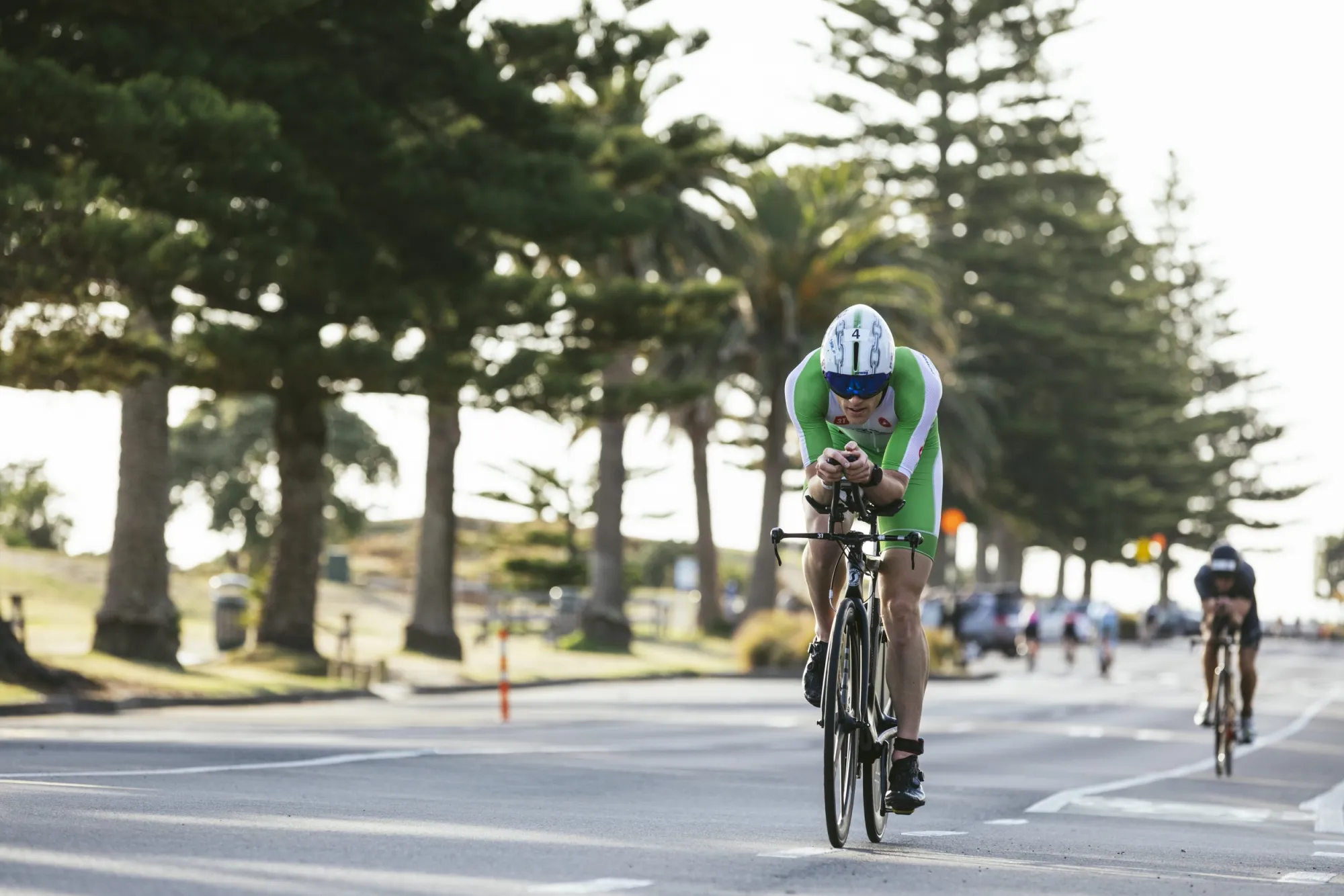
The Tauranga Half bike course at Mount Maunganui. Flat, fast, and no hill anywhere to make you ease off.
The course is flat and fast. A flat course never makes you back off. There’s no hill to force a soft pedal and no descent to recover on, so you hold the same watts for 90km and only find out what they cost you once you’re running. I pulled apart 3 athletes’ race files from one weekend to show how the bike decides the run: how to pace a 70.3 bike.
The number you pick matters as much as the discipline to hold it, and I got that wrong here myself. I raced the Port of Tauranga Half in 2016 off a bike power plan built on top-form numbers I wasn’t actually holding at the time. Rode the first lap hard and grovelled the second. I came off with the fastest bike split of the day and a 2 minute 30 gap, having worked out beforehand that I’d need 3 minutes plus and good run legs to have a shot. I had neither. Braden Currie came past coming off the Mount on the first lap, and I held on for 2nd.
Two things the course map won’t tell you. The year I raced it, the last 20km of the bike was into a very solid headwind, so whatever you overspend early gets charged back with interest right at the end. And the race gets decided on the run laps around the base of the Mount, which arrive well after the bike has already taken its cut.
One thing to plan for now. Christmas lands about 4 weeks out from Tauranga, in the sharpest part of the build, and takes 2 weeks off most athletes I’ve coached. Deal with it in September or it costs you the race-specific block.
Challenge Wānaka 100, 20 February 2027
The race changed for 2027.
The Gallagher Insurance Challenge Wānaka Half is now the Challenge Wānaka 100: a 2km swim, 80km bike and 18km run. Against the half-distance it replaced, the swim is 100m longer, the bike is 10km shorter and the run is 3.1km shorter.
Everyone races the shorter bike harder, and the 18km run hurts about as much as the half marathon did. So plan your pacing off the new distances rather than last year’s.
Wānaka is also the hardest of the three on terrain. If you live somewhere flat, your build needs hills in it on purpose.
IRONMAN New Zealand and 70.3 New Zealand, 6 March 2027
Taupō is the one I know best. I’ve raced it, including the year it blew a gale, and the write-ups are in my race archive if you want to see what the day actually does to you.
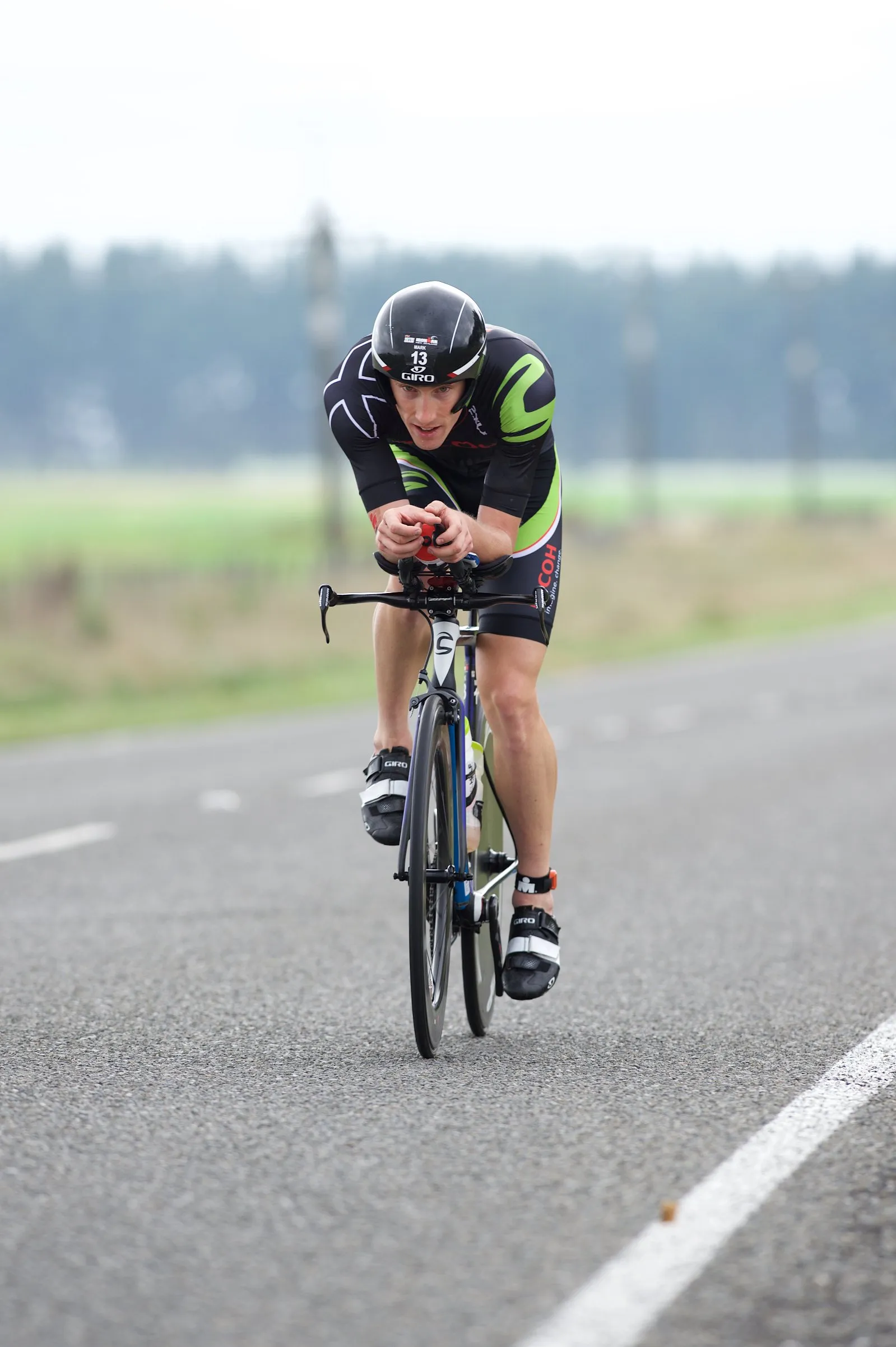
Out on the IRONMAN New Zealand bike course. Photo: Darryl Carey.
26 weeks out is close to the ideal Ironman build. Long enough to do the aerobic work properly, without a November spent wondering why you’re still doing 5 hour rides in the dark.
Training for it? My 70.3 training plan and Ironman training plan are built to these race dates.
The lake is usually flat and cold. The bike is 2 laps and rolls more than the elevation profile makes it look. The run is 3 laps through town with a crowd the whole way, which is either the best part of the day or the longest, depending on how you rode.
What the build looks like on 8 to 14 hours a week
Most of the athletes I coach aren’t training 20 hours a week. They’ve got a job and kids, and the weekend’s already half spoken for.
8 to 10 hours gets a working athlete to a strong Tauranga Half or 70.3 New Zealand. 2 swims, 2 or 3 rides with one long one, 3 runs. The long ride is the session you protect. Everything else can move.
10 to 14 hours is the full Ironman band, and it has to be consistent across the 26 weeks. Consistency does more work than volume here. A steady 11 hours every week beats 16 hours for a fortnight followed by a week off sick.
Below 10 hours the full distance gets rough. 8 to 10 is a half-distance week rather than an Ironman one, and treating it as an Ironman week is where the bad run splits come from.
The longer versions of both, with the weeks laid out, are here: training for an Ironman with a full-time job and how many training hours you need for a 70.3.
The plan you write in September is the one that breaks in November
Everyone’s motivated in September. The plans that fall over are the ones written for the September version of you, with 6 quality sessions a week and no room for a head cold or a work trip. By late November that plan has failed twice and you’ve stopped opening TrainingPeaks.
And more hours won’t save it. I reviewed the files of a self-coached athlete who went from 8 to 17 hours a week between 2 Ironman builds and finished 36 minutes slower, because the extra hours went into the wrong places.
Build the week you can repeat when you’re tired and behind. Then add to it when things are going well.
Common questions
When should I start training for IRONMAN New Zealand 2027?
September, for a race on 6 March 2027. That gives you 26 weeks, which fits a full base, build and race-specific phase with recovery weeks and a 2 to 3 week taper. You can get there off 16 to 20 weeks with an existing base, but the early weeks have to be sharper and there’s less room to be sick.
How many hours a week do I need for the Tauranga Half?
8 to 10 hours a week, held consistently for 20 weeks off a reasonable base, gets most working athletes to a half they can run the whole way. 2 swims, 2 or 3 rides including one long one, and 3 runs. Protect the long ride and let the rest move around your week.
Is Challenge Wānaka still a half?
No. It used to mirror the half distances. From 2027 it’s the Challenge Wānaka 100: a 2km swim, 80km bike and 18km run. The swim is 100m longer than the old race, the bike 10km shorter and the run 3.1km shorter. Train and pace to the new numbers.
Can I do IRONMAN New Zealand on 10 hours a week?
10 hours is the bottom of the range I’d want for the full distance, and it only works if it’s genuinely 10 hours most weeks across 26 weeks. Most age-group athletes prepare well on 10 to 14. What doesn’t work is averaging 10 by alternating 16 hour weeks with 4 hour weeks.
Which New Zealand race should I pick for my first half?
70.3 New Zealand at Taupō on 6 March, if you want the big-event feel and a course that rewards sensible pacing. Tauranga Half on 23 January if you’d rather race earlier and flatter. Wānaka is worth a look once you’ve done one, though from 2027 it’s a 100km race rather than a half.
Do I need a coach for these races?
Not always. If you’re in your first year or 2, a decent plan and consistency will take you a long way on their own. Coaching earns its money in the plateau years, when you’re training hard and the times have stopped moving. Here’s what that looks like for the full distance: Ironman coaching in New Zealand.
Work with me
I coach from Auckland, 1-on-1 through TrainingPeaks, across New Zealand and Australia. If you’re building toward Tauranga, Wānaka or Taupō and you want a plan written around your actual week, get in touch and tell me which race and how many hours you’ve realistically got.
Coaching options and pricing are on the coaching page.
Mark Bowstead raced as a professional triathlete from 2012 to 2020, including 5th at IRONMAN New Zealand in 2017, and has coached endurance athletes since 2017. He’s based in Auckland and coaches athletes online through TrainingPeaks across New Zealand and Australia.