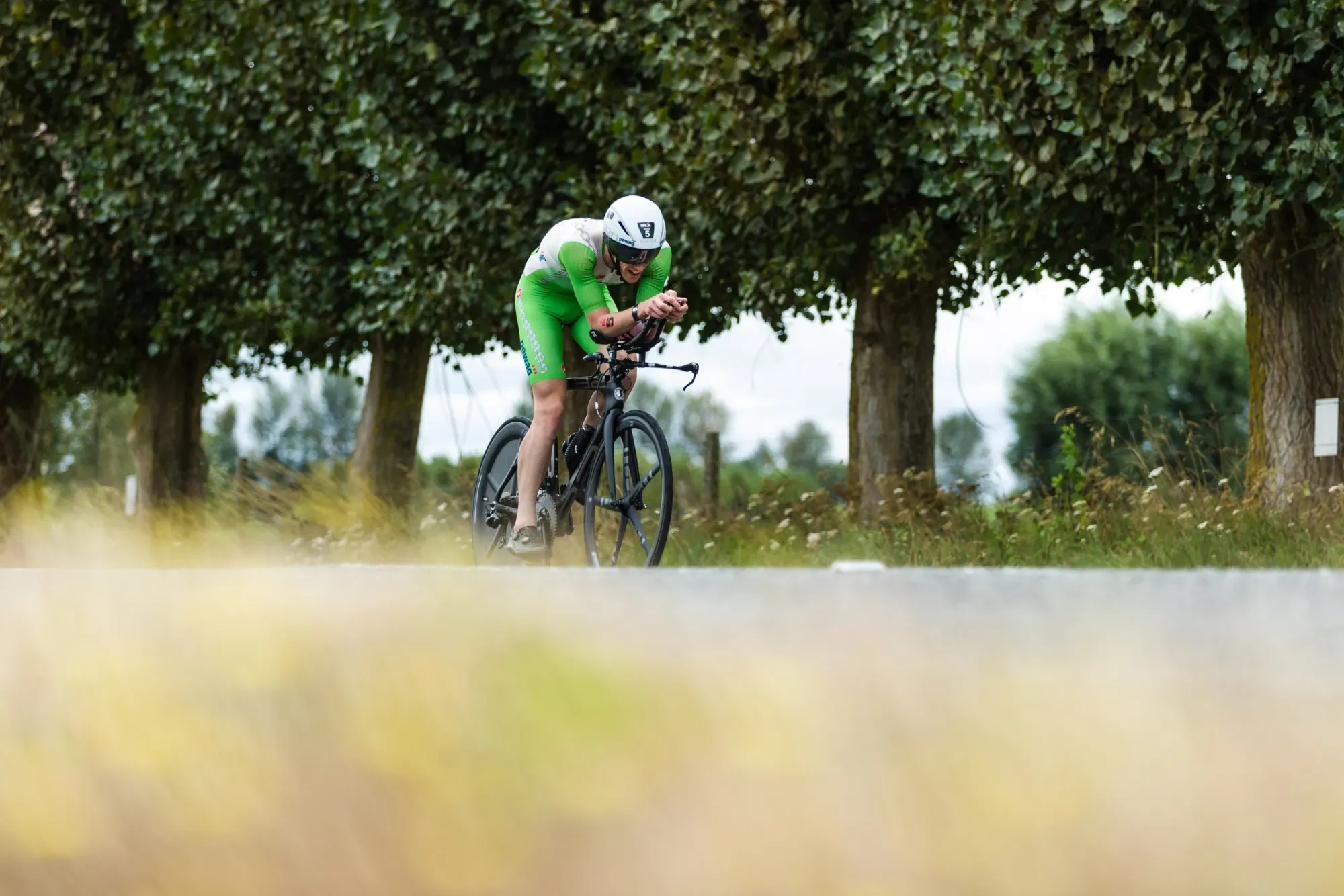
You can build to a full Ironman on 10 to 14 hours a week of well-targeted training. Most of my athletes do exactly that: 40 to 60 hour jobs, families, work travel, and a finish line in Taupo in March. The build works because the week has a shape that survives real life. Here’s that shape, and what it costs you.
The weekly shape
The pattern is a big weekend plus weekday consistency. Weekdays carry short, repeatable sessions in protected slots (before work, lunchtime). The weekend carries the volume, because that’s where working athletes actually have hours.
An example mid-build week at around 11 hours:
-
Monday. Off, or an easy swim, 0 to 1h.
-
Tuesday. Bike intervals on the trainer, before work, 1h.
-
Wednesday. Easy run, 45min to 1h.
-
Thursday. Swim, plus a short run if the week allows, 1 to 1.5h.
-
Friday. Easy spin or day off, 0 to 1h.
-
Saturday. Long ride, then 20 to 30min running off the bike, 3.5 to 5.5h.
-
Sunday. Long run, easy, 1.5 to 2h.
Two sessions do most of the work. The long ride builds to 4 to 5 hours through the final 10 weeks, ridden at Ironman effort with race nutrition practised, because bike durability is what protects your marathon. The long run typically builds to around 90 to 120 minutes at conversational pace.
Everything else exists to keep the engine ticking between weekends. A 1-hour trainer session with structure does more than 90 unstructured minutes, and it fits before an 8:30am meeting.
The weekday sessions look small. Their job is frequency, and frequency is what a working athlete can actually defend. Miss a Tuesday and the build barely notices. Miss 3 weekends in a row and we’re re-planning.
The trade-offs
Saturday mornings belong to the bike for about half the year. Your family should get a vote on that before you enter, and the athletes who last are the ones who had that conversation early.
The social middle of the sport mostly goes. Casual group rides that surge for 3 hours don’t fit a 12-hour week, because they cost recovery you’ve already budgeted elsewhere.
Sleep becomes a training decision. On 45 work hours plus 12 training hours, the late-evening scroll is where your adaptation quietly leaks out.
And you’ll train tired sometimes. The plan accounts for that. What it can’t absorb is jamming missed sessions into the gaps, so when work blows up a week, the week gets rebuilt rather than crammed.
How long the build takes
For IRONMAN New Zealand, 6 months out is ideal and 4 months is workable. Later than that and we’re managing what’s already there rather than building.
For a first full Ironman I’d rather have closer to 9 months, so the long rides and runs can grow gradually instead of jumping. The limiter for working athletes is how fast the body absorbs load on compressed recovery, and rushing that is how builds end at the physio.
If you’re coming from a 70.3 background, the shape will feel familiar and the long sessions just stretch. I’ve written up how many hours a 70.3 takes if that’s the nearer goal. And if you’re tempted to solve the Ironman problem with volume alone, read about the runner who doubled his hours and went 36 minutes slower first.
Common questions
How many hours a week do you need for a full Ironman?
Most age-group athletes can prepare well on 10 to 14 hours a week of well-targeted training. My athletes sit in that band around full-time jobs, with a small number of bigger weeks placed where their calendar can absorb them. The quality and placement of the hours counts for more than the raw total.
Can I train for an Ironman working 50 or 60 hours a week?
Yes, if the plan is built for your actual diary rather than a generic template. The weekday sessions have to be short and protected, the weekend has to carry the volume, and the plan has to bend when work blows up. That fit is most of what you’re buying when you pay for individual coaching.
Do I need to train twice a day?
Occasionally, and they’re modest days: a morning swim plus a short evening run, or the Saturday ride with a 20 to 30 minute run straight off the bike. Double days in an age-group Ironman build are a scheduling tool for fitting frequency around work, never a volume badge.
What’s the longest training session in an Ironman build?
The long ride, which reaches 4 to 5 hours through the final 10 weeks, ridden at Ironman effort with race nutrition practised. Plan on at least 6 of those rides in the build for most athletes. The long run typically tops out around 90 to 120 minutes at conversational pace, because run durability is built mostly on the bike.
How far out should I start training for an Ironman?
For IRONMAN New Zealand, 6 months out is ideal and 4 months is workable. For a first full Ironman, closer to 9 months gives the long sessions room to grow gradually. Starting later means managing the fitness you already have rather than building the fitness the race needs.
Where to from here
How the coaching runs week to week is on the Ironman and 70.3 coaching page, and current pricing is on the coaching options page. Premium is $350 a month, and the standard tier is full to new athletes right now. If running is your race instead, the same working-week thinking sits behind the executive marathon plan. Or get in touch. No hard sell, just a conversation about your race and your week.
I’m Mark Bowstead, a triathlon coach based in Auckland. I raced professionally for nine seasons, won IRONMAN 70.3 Buffalo Springs, and hold an engineering degree with First Class Honours from the University of Auckland. I coach time-pressured professionals through Ironman, 70.3 and marathon builds. Every plan lives in TrainingPeaks and gets rebuilt each week from what you actually did. More about my background.